© Brighteon.com All Rights Reserved. All content posted on this site is commentary or opinion and is protected under Free Speech. Brighteon is not responsible for comments and content uploaded by our users.
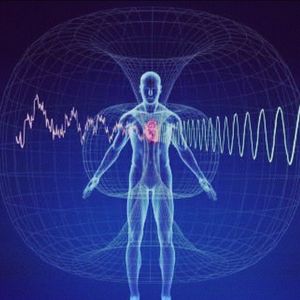
Follow Psinergy Here For Livestream & Biofield Practice Content: https://ko-fi.com/psinergy
.
SynBio R&D And The Psyops That Prevent You From Learning Anything Real
.
https://odysee.com/@Psinergy:a/trim.248B1084-664A-4B58-9C80-50C86B6C17D5:0
https://obophenotype.github.io/human-phenotype-ontology/phenopackets/
https://pmc.ncbi.nlm.nih.gov/articles/PMC6057139/
https://www.nature.com/articles/d43747-020-00579-2.pdf
phe·no·type -noun - BIOLOGY
the set of observable characteristics of an individual resulting from the interaction of its genotype with the environment.
https://www.comsoc.org/publications/ctn/molecular-communication
https://milcom2024.ieee-milcom.org/program/classified-program
network centric warfare
GaAs TRMs, or Gallium Arsenide Transmit-Receive Modules, are solid-state electronic components primarily used in radar systems, particularly those employing Active Electronically Scanned Array (AESA) technology.
https://www.computerweekly.com/blog/Public-Sector-IT/Drone-kill-communications-net-illustrated
https://www.darpa.mil/news/2025/atmosense-shows-promise
global information grid
https://publicintelligence.net/fm-3-09-34-kill-box-tactics-and-multiservice-procedures/
https://www.researchgate.net/figure/A-WBAN-based-relaying-virtual-backbone_fig4_308850533
.
The invention of the first MEMS device is credited to Harvey Nathanson and Robert Wickstrom in 1965, at Westinghouse Research Laboratories. This device, a silicon cantilever, was used as a radio-frequency tuner. The term "MEMS" was introduced in 1986 by S.C. Jacobsen and J.E. Wood in a proposal to DARPA. While the core technologies were in development since the mid-1960s, MEMS applications became widespread in the 1990s and have continued to grow since then.
https://www.opengroup.org/sosa
Bio-MEMS, or biomedical microelectromechanical systems, are micro-scale devices designed for biomedical applications, often involving microfluidics and other microfabrication techniques. They have significant overlap with lab-on-a-chip (LOC) technology and micro-total analysis systems (uTAS). Bio-MEMS devices are used for a variety of purposes, including drug delivery, biosensing, and manipulating individual cells.
.

“They overplayed their hand”: Trump expects more Iran talks, keeps strikes on table

Global System Entering Age of Technological Entropy, Scholar Says

Democrats look to confront Benjamin Netanyahu, as a political reckoning with Gaza’s mounting death toll nears

Tucker Carlson Urges 25th Amendment Against Trump Over Iran War, Axios Reports

UAE, Azerbaijan Suspend Iranian Flights In Compliance With U.S. Sanctions
Trump Shelves Plans for Airstrikes on Mexico as Ties Improve, Officials Say
