© Brighteon.com All Rights Reserved. All content posted on this site is commentary or opinion and is protected under Free Speech. Brighteon is not responsible for comments and content uploaded by our users.
Why is YouTube Erasing History? | NYT Opinion

40 followers
Follow
0
Download MP3
Share
Report
Support This Channel
This channel has partnered with the Brighteon Store and receives a small commission from all sales generated from an affiliate link.
Click the shop now button below to help out this channel.
41 views • October 30, 2019
Under pressure to remove “extremist content,” platforms are purging vital human rights evidence.
In war zones, evidence captured on smartphones can provide a path to justice — but platforms like YouTube and Facebook are getting in the way. In the Video Op-Ed above, the Syrian activist and archivist Hadi Al Khatib urges platforms to overhaul and improve their content moderation systems. He fears that automated removal, which in 2017 deleted 10 percent of the archive documenting violence in Syria, risks erasing critical history.
As Dia Kayyali explains, there is no clear-cut answer for YouTube and Facebook, which deal with tens of thousands of minutes of video uploaded every second. These platforms have come under intense pressure to police extremist content and have been criticized as acting too slowly when killers live-stream mass shootings. Algorithms can act quickly, but they are often un-nuanced and fallible. Meanwhile, human content moderators endure an enormous psychological burden when they analyze gruesome content.
Facebook recently announced an oversight board with independent experts to help monitor content moderation. Mr. Al Khatib thinks this is a good step, but in a world in which platforms hold part of the key to humanitarian justice, it’s still not enough.
In war zones, evidence captured on smartphones can provide a path to justice — but platforms like YouTube and Facebook are getting in the way. In the Video Op-Ed above, the Syrian activist and archivist Hadi Al Khatib urges platforms to overhaul and improve their content moderation systems. He fears that automated removal, which in 2017 deleted 10 percent of the archive documenting violence in Syria, risks erasing critical history.
As Dia Kayyali explains, there is no clear-cut answer for YouTube and Facebook, which deal with tens of thousands of minutes of video uploaded every second. These platforms have come under intense pressure to police extremist content and have been criticized as acting too slowly when killers live-stream mass shootings. Algorithms can act quickly, but they are often un-nuanced and fallible. Meanwhile, human content moderators endure an enormous psychological burden when they analyze gruesome content.
Facebook recently announced an oversight board with independent experts to help monitor content moderation. Mr. Al Khatib thinks this is a good step, but in a world in which platforms hold part of the key to humanitarian justice, it’s still not enough.
Keywords
FREE email alerts of the most important BANNED videos in the world
Get FREE email alerts of the most important BANNED videos in the world that are usually blacklisted by YouTube, Facebook, Google, Twitter and Vimeo. Watch documentaries the techno-fascists don't want you to know even exist. Join the free Brighteon email newsletter. Unsubscribe at any time. 100% privacy protected.
Your privacy is protected. Subscription confirmation required.
Recent News

Pentagon Increases Briefings on $1.5 Trillion Budget Request as Senators Raise Timing and Transparency Concerns
Belle Carter

Food Safety Becomes Midterm Election Issue After Record Cyclospora Outbreak, Recalls
Coco Somers

Hamas Leader Says Palestinian “Blood” Is Being Used as Fuel for Israeli Elections
Belle Carter

Inside the eight-figure plan to build data centers despite moratoriums
Lance D Johnson
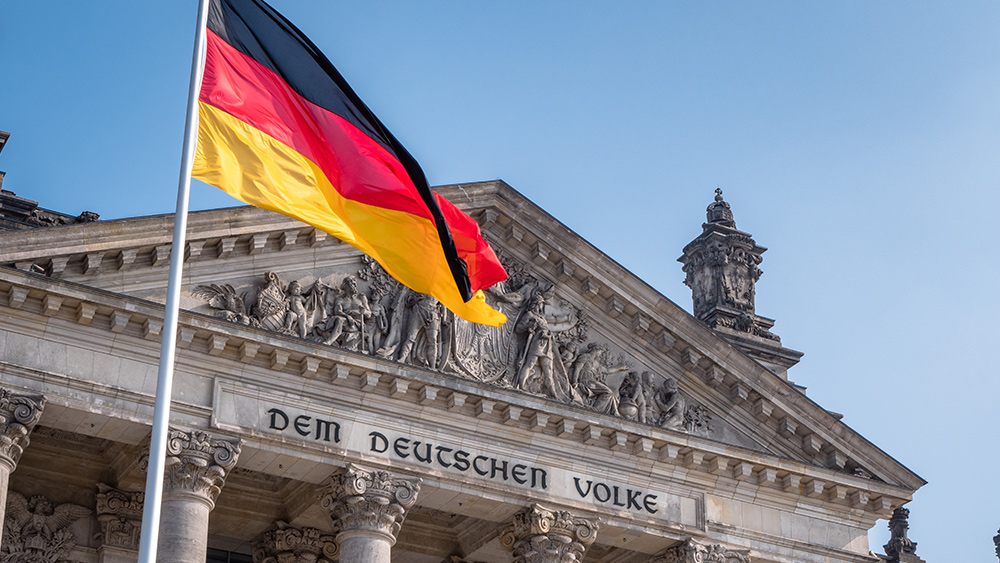
Germany’s ruling coalition pushes to outlaw its biggest opposition party
Cassie B.

Iranian Flights to Turkiye, East Asia Continue Despite U.S.-Led Air Restrictions, Tehran Says
Belle Carter
