© Brighteon.com All Rights Reserved. All content posted on this site is commentary or opinion and is protected under Free Speech. Brighteon is not responsible for comments and content uploaded by our users.

The Doors - The End - from the movie "Apocalypse Now", 1979
First, to generalize the movie... In Vietnam in 1970, Captain Willard (Martin Sheen) takes a perilous and increasingly hallucinatory journey upriver to find and terminate Colonel Kurtz (Marlon Brando), a once-promising officer who has reportedly gone completely mad. In the company of a Navy patrol boat filled with street-smart kids, a surfing-obsessed Air Cavalry officer (Robert Duvall), and a crazed freelance photographer (Dennis Hopper), Willard travels further and further into the heart of darkness.
The song "The End" was released in 1967.
Songfacts: "The End" is death, although the song also deals with Jim Morrison's parents - it contains Oedipal themes of loving the mother and killing the father. Morrison was always vague as to the meaning, explaining: "It could be almost anything you want it to be."
Jim's father, George Stephen Morrison was a United States Navy rear admiral and naval aviator. Morrison was commander of United States naval forces during the Gulf of Tonkin Incident of August 1964, which sparked an escalation of American involvement in the Vietnam War.
Most fans of The Doors will know that Morrison’s father was a flag officer in the US Navy. Few are aware that he was also a member of the US Naval force at the time of the Gulf of Tonkin Incident, a confrontation between the USS Madoxx and three Vietnam People’s Navy torpedo boats that gave the Jonhson Administration the justification they needed to declare war on Vietnam. Jim’s father, George Morrison, graduated with the US Naval Academy’s Class of 1941. His first posting was to Hawaii, where he joined the crew of the minelayer USS Pruitt just in time to witness the attack on Pearl Harbour. Following several deployments in an administrative capacity with the Navy, George decided to join flight school, earning his Wings of Gold in 1944, after which he embarked on combat missions in the Pacific in the final days of World War Two and, later, during the Korean War.
By summer 1964, Morrison found himself aboard the USS Bon Homme Richard, the flagship for Naval forces stationed off the coast of North Vietnam. On August 2nd, the ship was attacked by three torpedo boats while performing a signals intelligence patrol 28 miles from the coast. As the boats approached, the Maddox fired warning shots, which were returned by machine-gun fire. Four North Vietnamese sailors were killed, and six more were wounded. The Maddox, however, emerged unscathed save for a single bullet hole. Following the confrontation, Morrison and company were put on high alert. President Johnson subsequently ordered Maddox and the USS Turner Joy to sail close to the coast and show the flag in an act of intimidation. A few days later, during an evening of stormy weather, the ships picked up sonar and radio signals that they believed were signs of another attack from the North Vietnamese navy. Believing this was enough to warrant defensive action, the ships fired on enemy targets despite no physical signs of enemy activity and reports that both attacking torpedo boats had previously been sunk.
It’s believed that the details of the incident were intentionally distorted by Morrison and other commanding officers on board the ships under the orders of the Pentagon. That very night, President Johnson interrupted primetime TV for an emergency announcement. He informed the American public that two US Navy warships had been attacked off the coast of Vietnam and that he was asking for congress’ support in conducting military action in the area. Back in the choppy seas of North Vietnam, Morrison and his team contacted US Navy headquarters in Hawaii to tell them that the enemy targets they had fired on may not have actually existed in the first place and that they could have been false returns due to the stormy weather. HQ, in turn, contacted Defense Secretary Robert McNamara but never revealed this essential information. As a result, Congress approved the Gulf of Tonkin Resolution, which gave the president the power to embark on military action in Southeast Asia. And thus the Vietnam War began.
Democrats look to confront Benjamin Netanyahu, as a political reckoning with Gaza’s mounting death toll nears
Tucker Carlson Urges 25th Amendment Against Trump Over Iran War, Axios Reports
UAE, Azerbaijan Suspend Iranian Flights In Compliance With U.S. Sanctions
Trump Shelves Plans for Airstrikes on Mexico as Ties Improve, Officials Say

Pentagon Installs Flock License Plate Readers at Parking Facilities Under No-Bid Contract
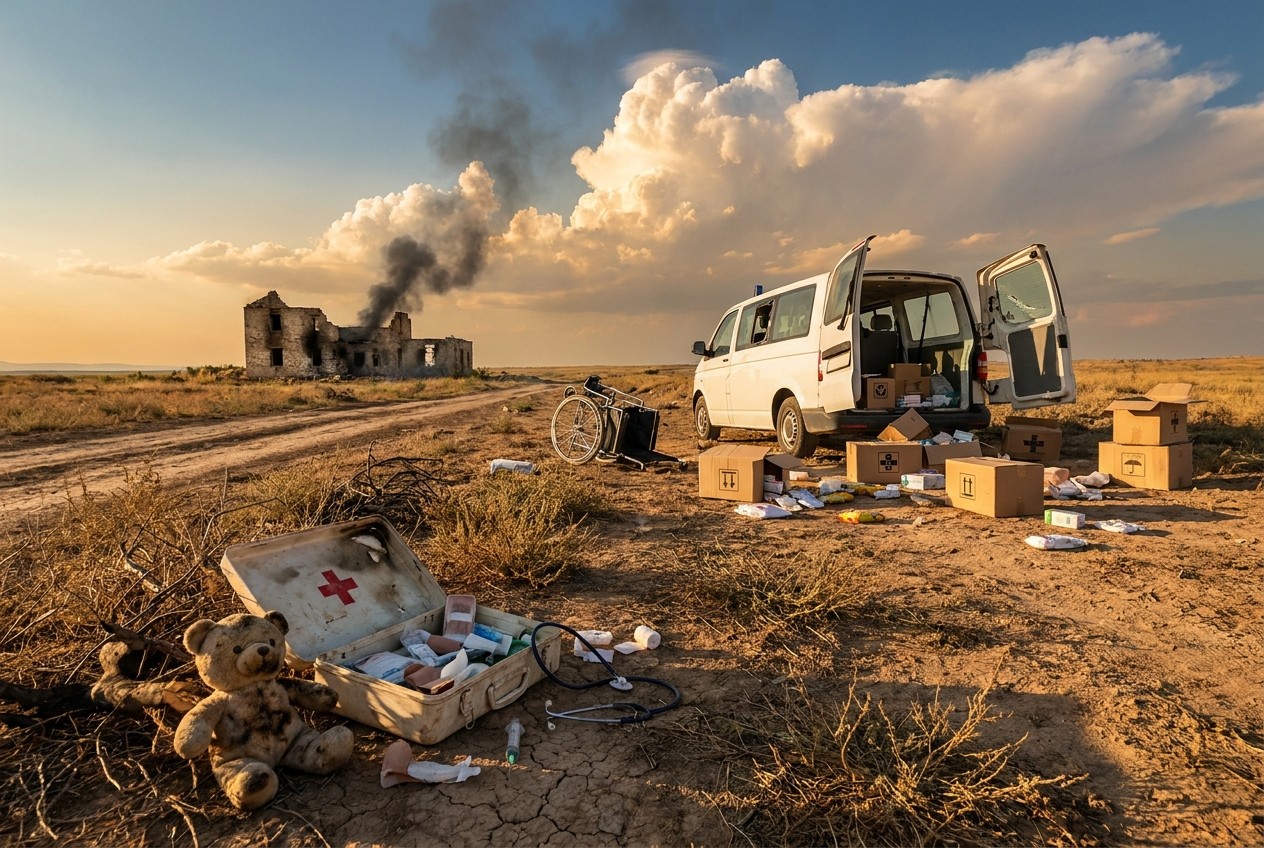
Ukrainian Strike Kills Three Humanitarian Workers in Zaporozhye Region, Russian Officials Say
