© Brighteon.com All Rights Reserved. All content posted on this site is commentary or opinion and is protected under Free Speech. Brighteon is not responsible for comments and content uploaded by our users.

Washington vs. Benshoof.
1. Jury Instructions and Deliberation Process
2. Validity and Constitutionality of Restraining Orders
• Defense argued that the restraining orders issued by the municipal and family courts were unconstitutional, citing violations of due process and fundamental parental rights.
• Defense referenced multiple legal precedents, including State v. Wyant, State v. Green, and Dependency of JH, to support claims that the orders violated Mr. Benshoof’s rights to care, custody, and control of his son.
• Defense claimed the orders failed to meet strict scrutiny standards and procedural requirements, such as findings of parental unfitness or direct harm to the child.
• The court rejected these arguments, finding the restraining orders validly served, constitutional, and not void, emphasizing Mr. Benshoof’s refusal to participate in the family law case despite notice.
3. Unconstitutionality of Stalking and Harassment Laws
• Defense challenged the stalking and harassment statutes as overly broad and void for vagueness, citing terms like "annoy," "alarm," and "legitimate purpose" as insufficiently defined.
• Defense referenced cases such as State v. Moulton and United States v. Popa, arguing that similar statutes were deemed unconstitutional for failing to distinguish between protected and unprotected speech.
• Defense proposed a jury instruction defining "legitimate purpose" broadly to exclude constitutionally protected activities from criminal conduct, which the court denied.
• The court found no merit in the defense’s claims, ruling that the statutes were not vague or overly broad and did not violate First Amendment rights.
4. Evidence of Harassment and Stalking
5. Defense’s Motion for Acquittal
• Defense moved for acquittal on multiple grounds, including the unconstitutionality of the restraining orders, stalking and harassment statutes, and alleged procedural errors in serving the orders.
• Defense argued that the municipal court order was void due to overlapping jurisdiction with the superior court and that the family court order exceeded the original petition’s scope.
• The court denied the motion, finding sufficient evidence to support the charges and rejecting claims of constitutional violations or procedural errors.
6. Witness Testimonies and Cross-Examinations
• Jessica Owen and Magalie Lerman testified about their experiences with Mr. Benshoof, including harassment, threats, and litigation tactics that caused fear and emotional distress.
• Defense attempted to cross-examine witnesses on topics such as aliases used by Ms. Lerman and her alleged prior felony conviction, which the court excluded as irrelevant or inadmissible.
• Defense sought to introduce testimony from Mr. Benshoof’s son, A.W., regarding his preference to live with his father and concerns about vaccine side effects, but the court deemed the witness unavailable.
7. Jury Instructions and Verdict Forms
• The court reviewed and corrected errors in the jury instructions and verdict forms, including typographical issues and clarifications on specific elements of the charges.
• The court instructed jurors on the definitions of terms such as "threat," "harass," "malice," and "repeatedly," as well as the elements required to convict on charges of harassment, stalking, and attempted stalking.
• Special verdict forms were discussed, with the state agreeing to revise language for clarity and accuracy before submission to the jury.
8. Defense’s Decision on Testimony
• Defense requested a continuance to prepare Mr. Benshoof for testimony, which the court denied, citing prior notice of the trial schedule and the need to proceed without delay.
• Defense ultimately decided that Mr. Benshoof would not testify, prompting the court to adjust jury instructions accordingly.
• The court emphasized that the defendant’s decision not to testify could not be held against him during deliberations.
Next steps
1. Correct the typographical error in Verdict Form C by removing the extra "of" and ensuring it reads "We, the jury, find the defendant Kurt Benshoof guilty or not guilty of the crime of harassment charged in count two.": Mr. Jenkins
2. Rephrase the sentence in the Special Verdict Form to replace "alternative question two" with "or alternative question two" and ensure the sentence reads correctly: Mr. Jenkins
3. Verify the accuracy of the rephrased Special Verdict Form by cross-checking it with the relevant statute and law, and send a follow-up email to the court and counsel with the corrected version: Mr. Jenkins

A nihilistic president, a bankrupt war: The Iran quagmire could sink the GOP in November
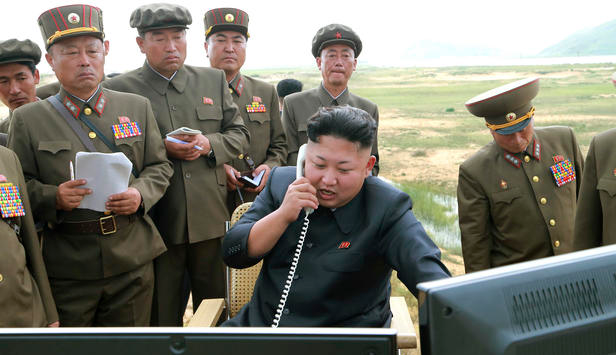
Russia is not isolated: North Korea troops are widening Putin’s war in Ukraine

“They overplayed their hand”: Trump expects more Iran talks, keeps strikes on table

Global System Entering Age of Technological Entropy, Scholar Says

Democrats look to confront Benjamin Netanyahu, as a political reckoning with Gaza’s mounting death toll nears

Tucker Carlson Urges 25th Amendment Against Trump Over Iran War, Axios Reports
